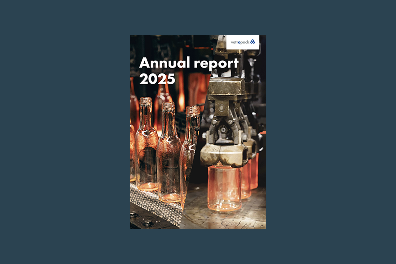
TROX demonstrates that sustainability is far more than a regulatory obligation: With consistent ESRS reporting and a deeply rooted corporate culture, the HVAC specialist sets the standard. Halving its carbon footprint since 2020 and setting ambitious net-zero targets for 2050 prove that at TROX, sustainability isn’t just a glossy brochure – it’s a transformation in action.
TROX SE, a global leader in ventilation technology since 1951, has published its second ESRS Sustainability Report 2025 – a consistent evolution of the first fully ESRS-aligned report from 2024. Headquartered in Neukirchen-Vluyn on the Lower Rhine, the company operates 18 production facilities worldwide and 28 operating subsidiaries in 27 countries across five continents; it is present in over 80 markets and is thus deeply integrated into international value and supply chains. In 2024, 4,589 employees generated revenue of 687 million Euros, accompanied by investments totaling 66 million Euros – in new plants in China and Mexico, capacity expansions in Europe and South Africa, and photovoltaic systems at numerous locations.
ESRS are demanding
ESRS is not a form you fill out on the side. The standards require an in-depth engagement with double materiality. TROX began this learning process early on, long before the 2025 report entered the concrete drafting phase. Those responsible had to understand not only the technical requirements, but above all the mindset behind the ESRS: moving away from selective success stories toward a systematic, comparable, and verifiable presentation of impacts, risks, and opportunities along the entire value chain.
Close involvement of the functional departments is a key factor
The challenge lay in translating the ESRS requirements for the business departments. HR experts, procurement professionals, and EHS specialists are experts in their respective fields – but not sustainability reporters. TROX addressed this gap through targeted training sessions and workshops that not only explained what needed to be delivered but also why: what role the respective metrics play in the dual materiality framework and how they contribute to the company’s overall narrative. This dialogue strengthened not only compliance but also the internal sustainability culture.
At TROX, sustainability is not a regulatory obligation but the core of the corporate culture, supported by the Heinz Trox Foundation, which, as a shareholder, thinks in terms of decades. 99 percent of TROX’s emissions fall under Scope 3 and are thus outside the direct scope of the company. By 2024, TROX had already reduced its Scope 1 and 2 carbon footprint from 30.6 to 13.4 tCO2eq per million Euros of net revenue – a 50% reduction compared to 2020. Photovoltaic systems generated over 1.8 million kWh of electricity per year, hybrid curing ovens save 35 percent in energy, and geothermal projects in Norway cover the entire heating needs of the headquarters there. The report is thus not a starting point, but a reflection of practices already in place. TROX was honored with the BME Sustainable Supply Award 2025 – for its “Sustainability Procurement Transformation,” through which the company creates maximum transparency along the entire global supply chain and consistently establishes sustainable procurement processes. The BME – the German Association for Materials Management, Purchasing, and Logistics – is the leading professional organization for purchasing and supply chain management in the German-speaking world.
The right approach makes all the difference
Wave 2 companies – i.e., large, typically non-capital-market-oriented companies with more than 1,000 employees and over 450 million Euros in revenue – must publish their first fully compliant CSRD-ESRS report in 2028, based on data from the 2027 fiscal year. Although the European “Stop-the-Clock” omnibus provided a two-year buffer, it effectively allowed no pause: processes, governance structures, and data interfaces must be in place well before 2027. The right mindset is crucial here. A sustainability report is not a burdensome formality if viewed as an opportunity to credibly demonstrate – both internally and externally – what the company is already doing for the environment and society. Today, customers expect transparency regarding CO2 emissions and sustainability metrics; banks are increasingly weighing ESG data in creditworthiness assessments; and talent selects employers based on their environmental and social responsibility. Furthermore, engaging with ESRS and the EU Taxonomy sharpens strategic vision: Scope 3 risks in the supply chain become visible, and circular economy potentials can be identified. Sustainability makes companies smarter – if the process is taken seriously.
Specifically, the following is recommended: First, define governance structures and clarify responsibilities. Then conduct a materiality analysis, where a baseline could include at least E1 Climate Change, S1 Own Workforce, and G1 Corporate Policy. Next, establish data processes, evaluate tools, and conduct test runs early on. Involve functional departments in a structured manner, using context rather than just checklists. And finally: view the report as a communication tool that builds trust—with customers, banks, and employees alike. TROX demonstrates that this approach pays off.
This article was first published in the Reporting Times des Center for Corporate Reporting.
Get in touch. We are happy to tell you more about it.